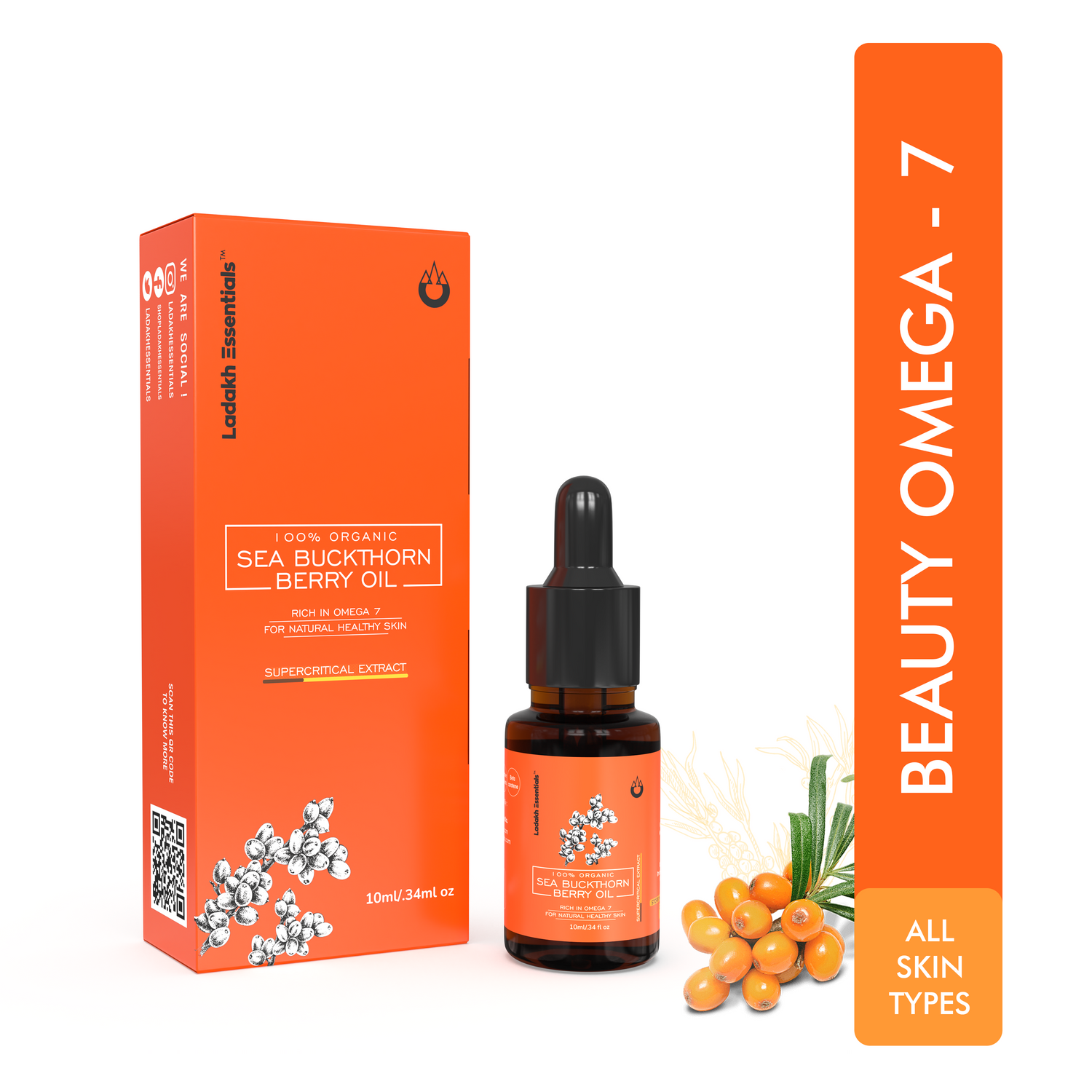


CO₂ Extraction vs. Cold Pressed: Why It’s Best for Sea Buckthorn & Rosehip
Deldan NamgailShare

Why CO₂ Extraction Is Superior: The Secret to High-Potency Sea Buckthorn and Rosehip Oils
If you’ve been searching for the "best Rosehip oil for face" or "pure Sea Buckthorn berry oil," you’ve likely come across the term CO₂ Extraction. But is it just a fancy marketing buzzword, or does it actually change how the oil works on your skin?
As it turns out, the method used to pull the oil from the plant is the single most important factor in determining its healing power.
What is CO₂ Extraction? (The Science of Purity)
Traditional oils are usually cold-pressed (mechanical squeezing) or solvent-extracted (using chemicals like hexane). While cold-pressing is better than chemical extraction, it still generates friction-based heat and exposes the oil to oxygen, which can lead to early rancidity.
CO₂ Extraction (Supercritical Fluid Extraction) uses pressurized carbon dioxide to reach a "supercritical state"—where it acts like both a gas and a liquid. This allows it to gently pull every nutrient out of the plant without the need for heat or harsh chemicals.
3 Reasons Why CO₂ Extracted Oils Are Better for Your Skin
1. Zero Heat, Maximum Nutrients
Many of the most powerful components in Sea Buckthorn and Rosehip—like Vitamin C, Vitamin A (Retinol), and Omega-7—are heat-sensitive. Even the friction of a cold press can reach temperatures that degrade these fragile molecules.
- The CO₂ Advantage: The process happens at low, controlled temperatures, meaning the "living" nutrients in the plant are delivered directly to your bottle.
2. A "Whole-Plant" Nutrient Profile
Traditional pressing often leaves behind the heavy, nutrient-dense waxes and resins of the plant. CO₂ extraction is much more thorough.
- Rosehip Oil: CO₂ extraction captures a higher concentration of trans-retinoic acid (natural Vitamin A) and skin-brightening lycopene.
- Sea Buckthorn Oil: It pulls out the maximum amount of Palmitoleic Acid (Omega-7), a rare fatty acid that is essential for collagen production and wound healing.
3. Extended Shelf Life and Stability
Oxygen is the enemy of botanical oils. When oils are exposed to air during pressing, they begin to oxidize (go rancid).
- The CO₂ Advantage: Because the extraction happens in a closed-loop, oxygen-free environment, the resulting oil is naturally more stable and has a much longer shelf life than cold-pressed alternatives.
Comparing the Results: Sea Buckthorn & Rosehip
| Feature | Cold-Pressed Oil | CO₂ Extracted Oil |
| Color | Often lighter/diluted | Deep, rich orange or ruby red |
| Aroma | Faint or slightly nutty | Robust, "true-to-plant" scent |
| Purity | May contain plant debris | 100% pure, no solvent residue |
| Potency | Standard | High-Concentration (Therapeutic Grade) |
Is It Worth the Investment?
You’ll notice that CO₂ extracted oils often carry a slightly higher price tag. This is because the technology requires specialized equipment and expertise. However, because the oil is so much more concentrated, you actually need fewer drops to see results.
When you choose CO₂ extracted Sea Buckthorn or Rosehip oil, you aren't just buying a moisturizer—you’re buying a potent, bioactive treatment that actually repairs the skin barrier.
Ready to experience the CO₂ difference?
We specialize in high-altitude, CO₂ extracted botanicals that retain their full therapeutic power.
[Browse our CO₂ Extracted Sea Buckthorn and Rosehip Collection Here]