

How to Spot Fake Sea Buckthorn Oil: The Ultimate Buyer’s Guide
Deldan NamgailShare

The "Liquid Gold" Warning: Is Your Oil Actually Healing You?
Sea buckthorn oil is currently flooding online marketplaces, but there is a hidden danger: counterfeit and diluted oils. Because pure sea buckthorn is one of the most expensive botanicals to produce, many brands "cut" their oil with cheap fillers or use extraction methods that destroy the nutrients.
If you are using sea buckthorn for skin repair or as an Omega-7 supplement, a "fake" oil isn't just a waste of money - it could be a risk to your health.
4 Proven Ways to Spot Real vs. Fake Sea Buckthorn Oil
1. The Visual Test: "Bright & Saturated" vs. "Dull & Dingy"
Authentic sea buckthorn oil is naturally rich in carotenoids, giving it an unmistakable, vibrant hue.
-
Real Berry Oil: A deep, saturated bright orange. On pale skin tones, it will leave a temporary, vivid orange stain.
-
Real Seed Oil: A brilliant golden yellow.
-
The Fake: If your oil is pale, transparent, or "dingy," it has been over-refined, diluted, or is an entirely different oil dyed to look the part.
2. The Scent: Botanical Power vs. Rubbery Chemicals
Your nose is a powerful tool for quality control.
-
Real Oil: Features a strong, distinct fruity, nutty, and botanical aroma. It smells like a concentrated plant.
-
The Fake: Counterfeit oils often have a rubbery smell, a chemical odor, or—most commonly—no scent at all.
3. The Extraction Myth: Why "Cold-Pressed" Seed Oil is a Red Flag
Many brands market "Cold-Pressed Seed Oil" because it sounds "natural." Don't be fooled.
-
Sea buckthorn seeds contain only 3-4% oil content. It is physically impossible to extract high-quality seed oil through a mechanical cold press efficiently.
-
The Expert Choice: Supercritical CO₂ Extraction is the gold standard. It uses pressurized CO₂ at low temperatures to pull 100% of the nutrients out without heat or toxic solvents. If a brand claims "cold-pressed" for seed oil, they are likely hiding the use of chemical solvents like Hexane.
4. The Omega-3 Lab Standard
A lab test is the only way to be 100% sure.
Fact: Real sea buckthorn berry oil must contain at least 38-50% Omega-7. In recent independent lab tests, many popular "fake" oils were found to contain zero Omega-7.
The Price of Purity: Why Cheap Oil is a Scam
The math doesn't lie. To produce a single batch of premium oil, the requirements are immense:
-
100kg of Berries yields only 8kg of Berry Oil.
-
100kg of Berries yields only 3kg of Seed Oil.
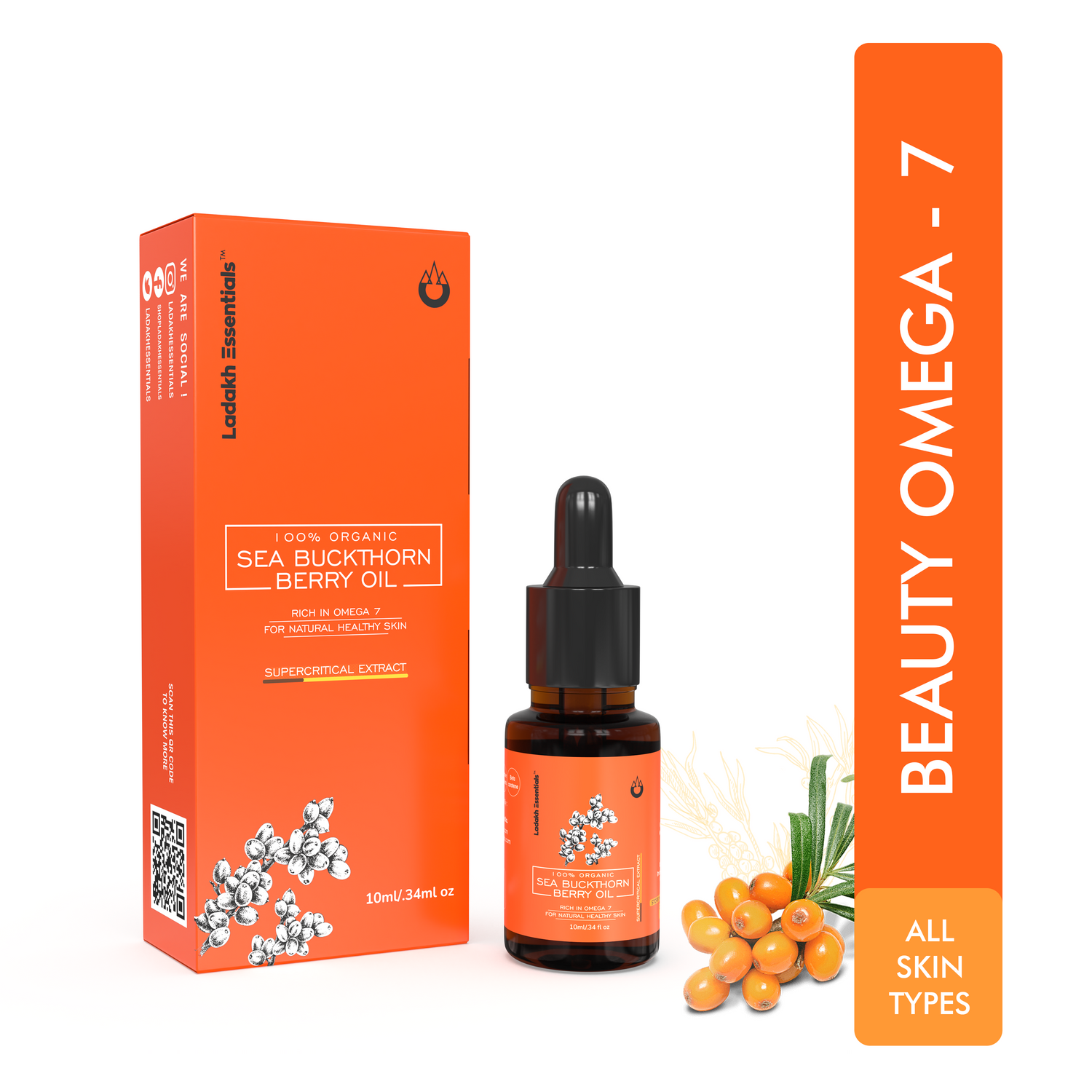
Our oil is wild-grown in the pristine, high-altitude environment of Ladakh, where the extreme climate forces the plant to produce higher concentrations of Omega-7. If you find a "deal" online that seems too good to be true, it’s because the bottle doesn't contain the 200:1 concentration required for true healing.
Why Our CO₂ Extracted Oil is Superior
We prioritize Supercritical CO₂ Extraction because it is the only way to ensure:
-
Internal Safety: Our oil is food-grade and safe for both internal (supplements) and topical (skincare) use. If your bottle says "not for internal use," it likely contains residual toxins.
-
Zero Oxidation: No oxygen touches our oil during extraction, keeping the Omegas fresh.
-
Fair Trade: We support the local harvesters in Ladakh, ensuring a sustainable future for this "miracle berry."